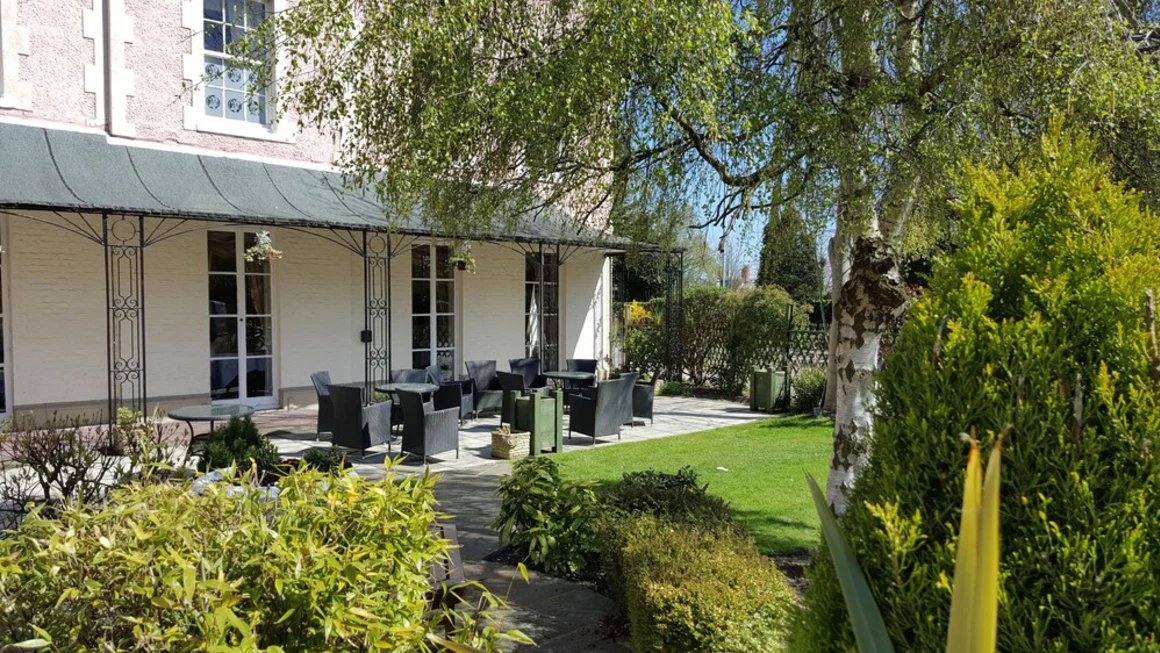
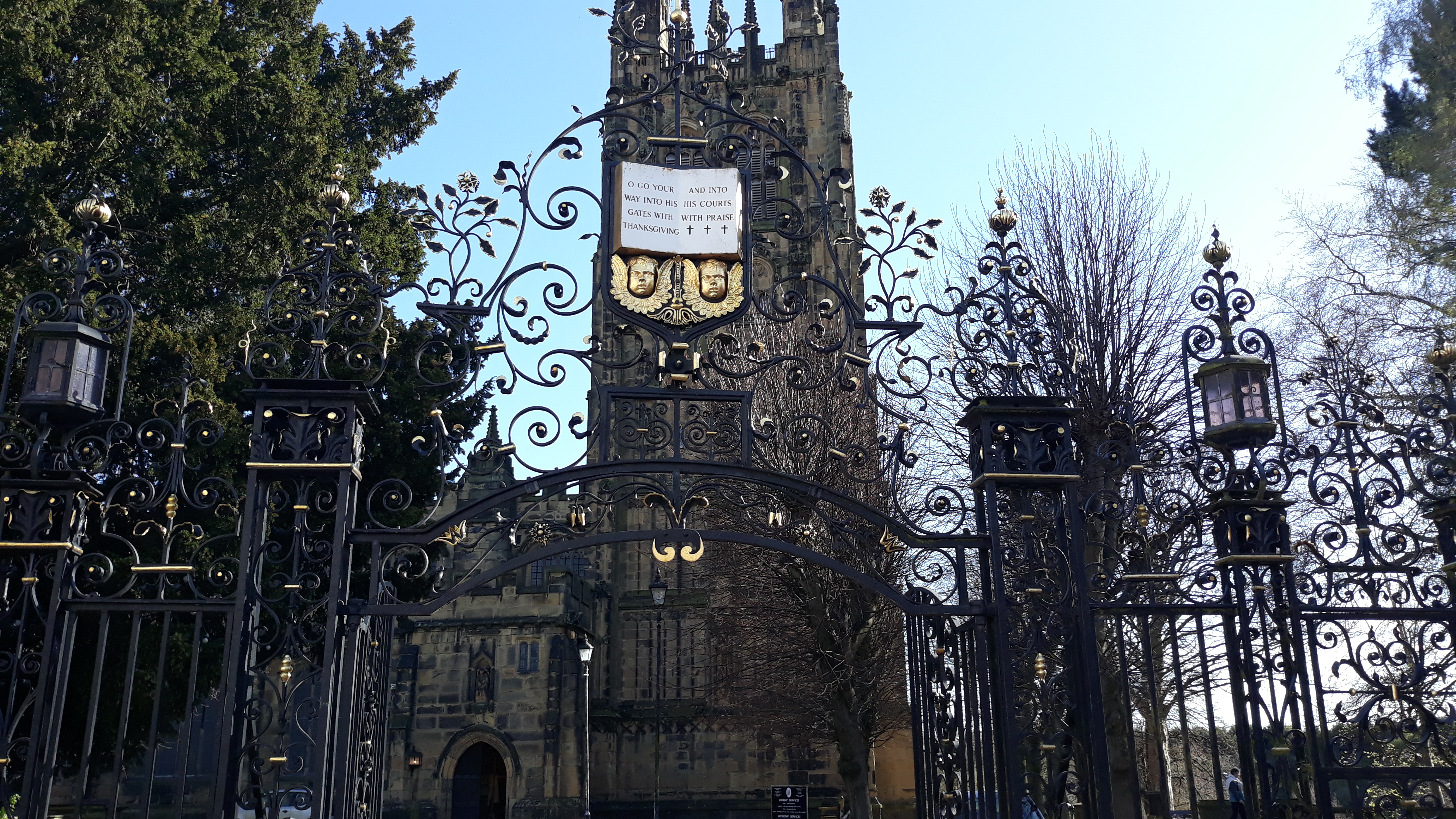
St Giles' Church & Elihu Yale

Begin where Wrexham's story truly starts: at St Giles' Parish Church, its 16th-century tower — listed among the Seven Wonders of Wales — rising over the town centre with a calm authority that no amount of Hollywood drama can diminish. Step inside and you are immediately in the presence of centuries; the nave is cool and hushed even on the loudest match day, and the stained glass throws pools of colour across stone that has absorbed eight hundred years of Welsh life.
In the churchyard lies one of the most unexpected graves in Britain: Elihu Yale, the Welsh-American merchant and benefactor whose fortune endowed the university in New Haven, Connecticut that bears his name to this day. The modest ledger stone is easy to miss — seek it out in the north-east corner. There is something quietly remarkable about finding the founder of Yale University buried in a North Wales churchyard, two hundred yards from a football ground that Ryan Reynolds owns.

Born in America, educated in England, enriched in India, he gave to Yale University the name it bears — and chose to be buried in a Welsh churchyard two hundred yards from a football ground. Few lives have spanned continents so improbably.
— On Elihu Yale, 1649–1721Coffee & Pastries at Zerno

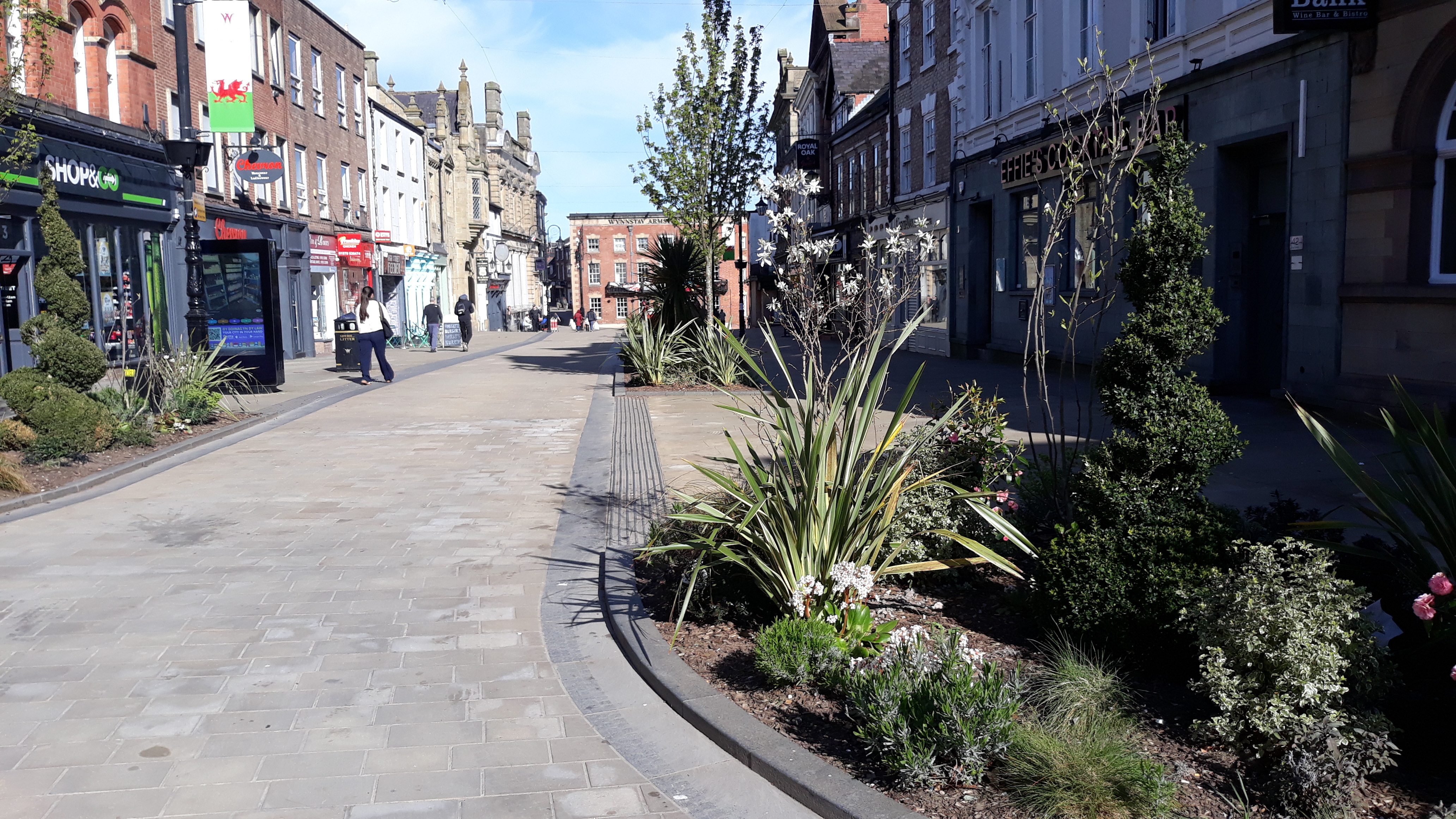
A ten-minute walk from St Giles brings you to Zerno, Wrexham's finest independent café and one of those places that makes a town feel quietly civilised. Named after the Ukrainian word for grain — and with a sourcing ethos to match — Zerno offers serious single-origin coffee and exceptional baked goods in a space that manages to be both considered and entirely unselfconscious. On match days it fills early; arrive before eleven and you will have your choice of seats.
This is the moment to settle in, read the programme if you have one, and let the particular atmosphere of a Wrexham match day gather around you. The town has a mood on these mornings — purposeful, good-humoured, slightly electric — that no other day quite replicates.

Maesgwyn Hall or The Turf Hotel

The pre-match ritual is as important as the match itself. Two pubs define the Wrexham match day experience, and the choice between them says something about what kind of day you want. Maesgwyn Hall — a large, well-run Wetherspoons set within a handsome converted hall — offers the broadest choice of ales and the most reliable pre-match feed, with space enough to actually secure a table even as kick-off approaches. It is convivial, unfussy, and exactly right.
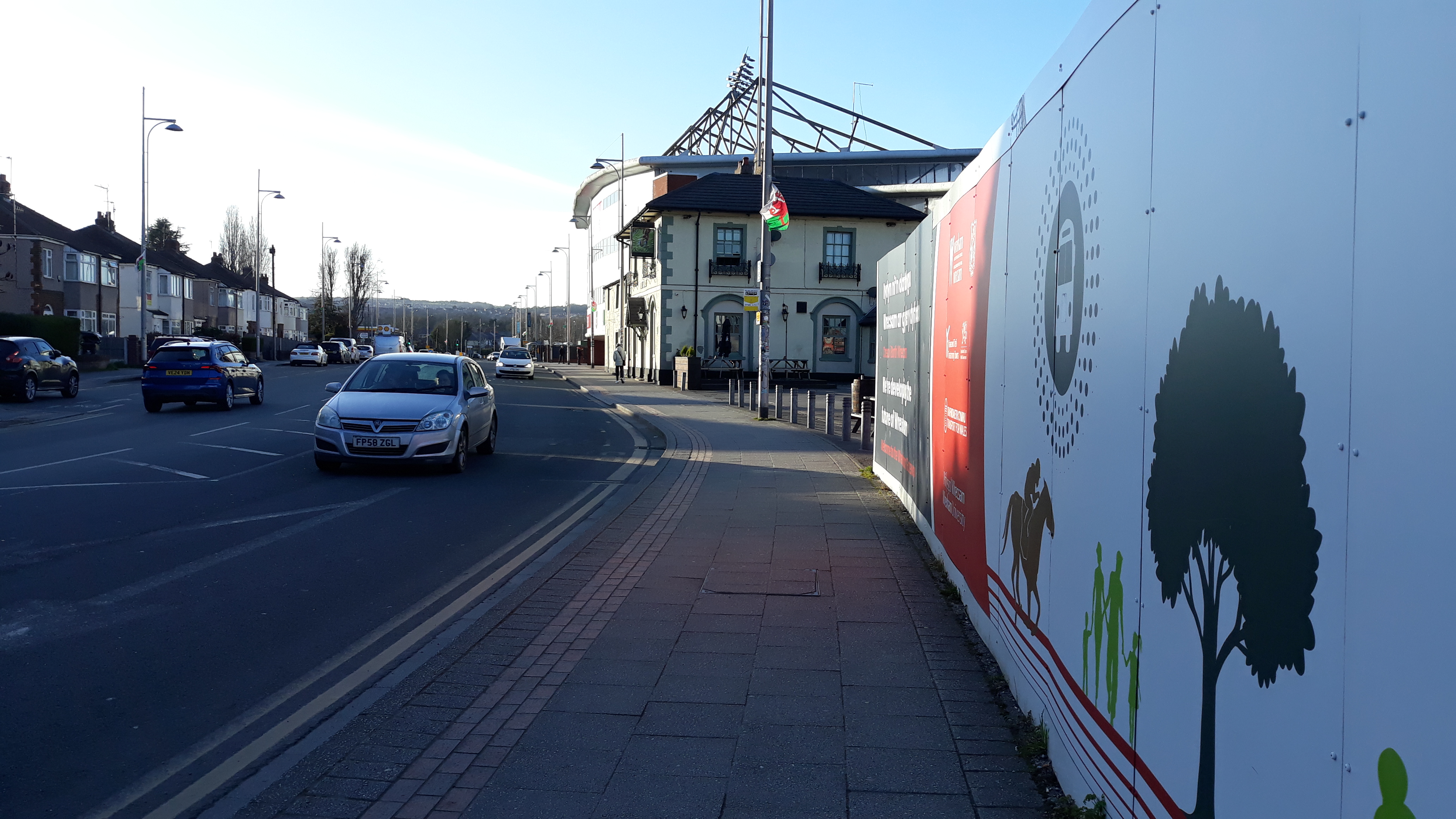
The Turf Hotel, directly adjacent to the ground on Mold Road, is the spiritual home of Wrexham match day: the nearest pub to the stadium, the most atmospheric, the most historic — but be warned, it fills to absolute capacity hours before kick-off and the wait for a drink can test even the most patient supporter. If you want the Turf experience, arrive no later than noon. If you want a drink before the match, Maesgwyn Hall is the safer choice.

The Match — STōK Cae Ras
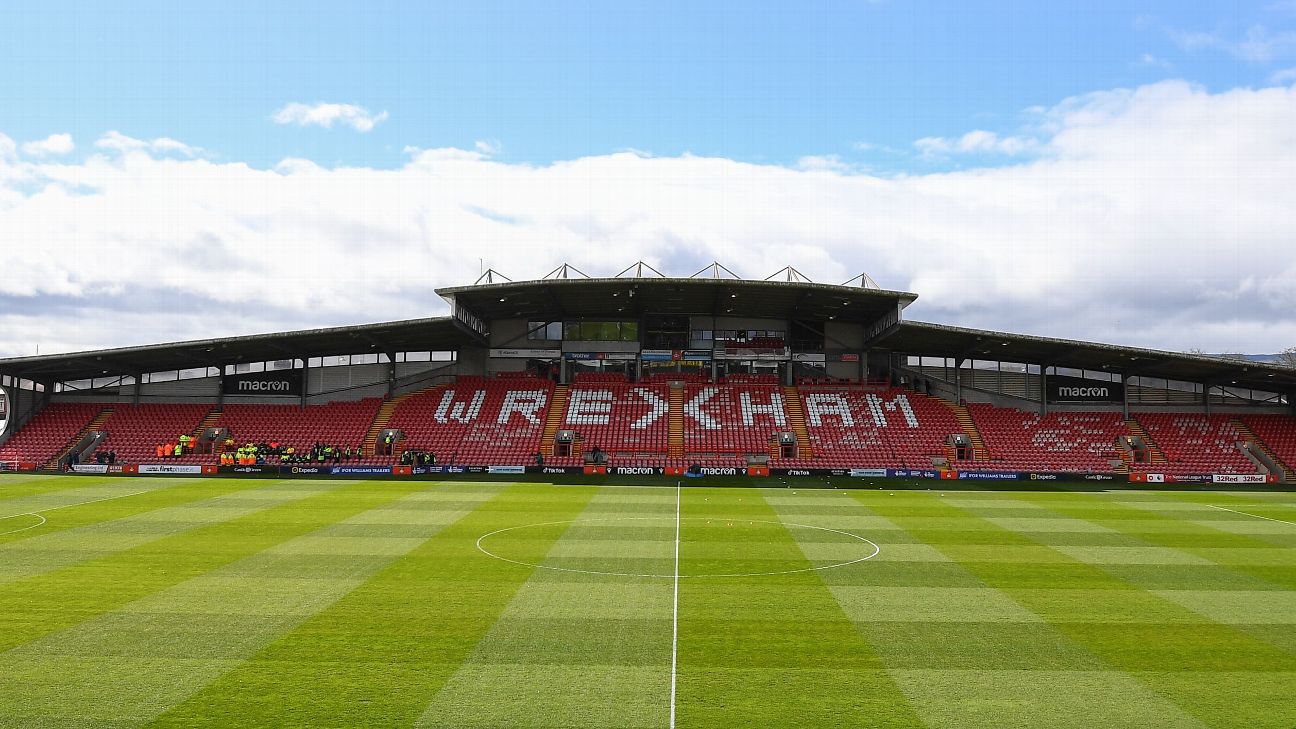
The walk from the town centre to the ground takes eight minutes; from The Turf, you are already there. The STōK Cae Ras — the Racecourse Ground — has hosted international football since 1877 and is the oldest stadium in the world still staging international matches. Step in for the first time and it is smaller than you imagined from the television, and more intimate than any stadium of comparable renown. The noise, when it builds, is extraordinary.
Wrexham's Championship season has brought larger crowds, bigger opponents, and a standard of football that would have seemed inconceivable five years ago. The atmosphere at Cae Ras on a home match day — the red shirts, the red seats, the roar when the ball hits the net — is one of those genuinely exceptional sporting experiences that no amount of media attention has yet managed to diminish. This is still, at its core, a real football club with a real community behind it.
We didn't buy Wrexham as a project. We fell in love with a football club and everything it meant to a community. The fact the world came along for the ride still surprises us every single day.
— Rob McElhenney, Co-Chairman, Wrexham AFC

Bank Street Social or The Bank


After the final whistle, the fifteen-minute walk back into the town centre along Regent Street is part of the experience: the crowd dispersing, the post-match analysis beginning, the town still wearing the warm glow of match day. Two venues suit this particular moment well.
Bank Street Social is exactly what its name suggests — a social space with good drinks, a relaxed atmosphere, and the kind of playlist that suits the hour between full-time and dinner. It draws a crowd that spans football supporters and non-fans alike, and the noise is convivial rather than overwhelming. The Bank, a short walk away, offers a more considered setting — a proper bar with a thoughtful spirits selection — if you want to decompress quietly before the evening. Both are a significant improvement on fighting for the bar at the Turf in the post-match chaos.


Supper at Lisbon Tapas
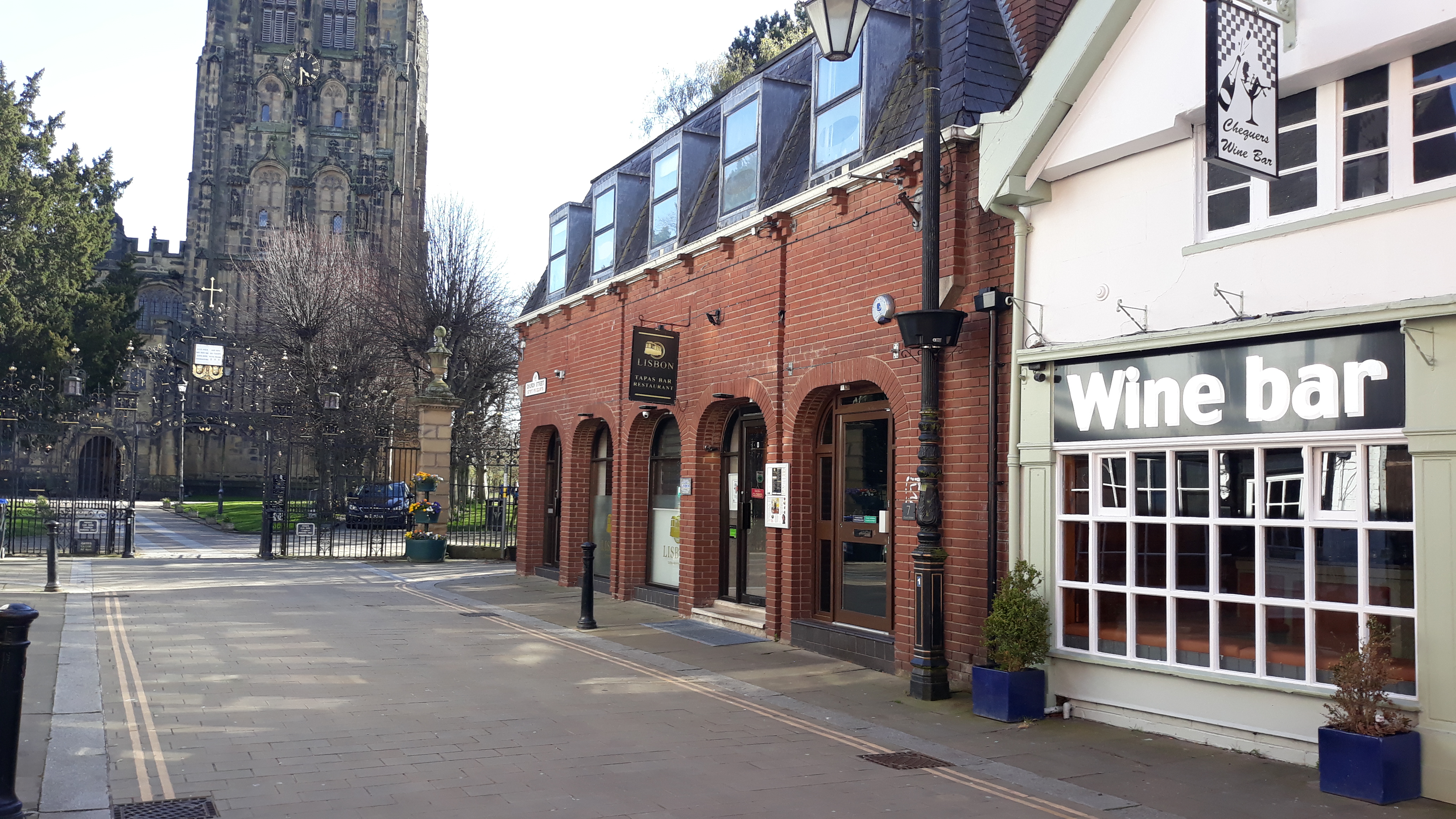
The evening ends at Lisbon Tapas, and the contrast with the day's football is part of its considerable pleasure. Portuguese small plates, outstanding wine, candlelight — it is the kind of restaurant that would not look out of place in Lisbon or Porto, and the fact that it occupies a quiet corner of Wrexham is one of the town's better-kept secrets. Book in advance for match days; the kitchen fills quickly as the post-match crowd makes its way into the centre.
The piri piri prawns, the slow-cooked lamb, the bacalhau with olive oil and garlic — these are generous, carefully made dishes that suit the long hunger of a full match day. Order freely and share across the table. The wine list is short and well-chosen, with particular attention to the Alentejo and Douro. By the time you finish, Wrexham will feel like exactly the right place to have spent an extraordinary day.