
Coffee at Coffee House Wrexham

Begin in the best possible way. Coffee House Wrexham is an exemplary independent — excellent coffee, house-made food, and an atmosphere that captures what Wrexham has become: a city that has rediscovered its confidence. Settle in with a flat white and something from the kitchen, and let the day ahead take shape around you. Wrexham in the morning, before the crowds build, has a particular quiet energy that repays taking things slowly.
The coffee scene in Wrexham has grown considerably in the last few years — the city's renewed profile has brought new investment and new ambition to the independents. Coffee House is the pick of the lot: properly made, unhurried, and the right place to begin a serious day of the city.

St Giles' Church & Elihu Yale
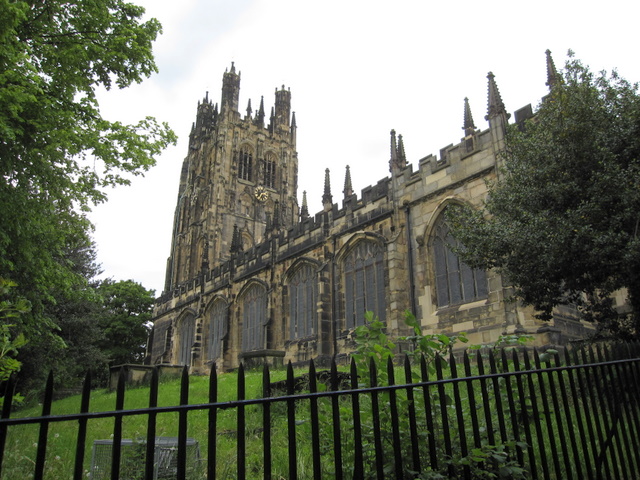
Walk ten minutes north from Coffee House and St Giles' will appear above the roofline long before you arrive. The 16th-century tower — 135 feet of ornate, pinnacled sandstone — is one of the Seven Wonders of Wales and one of the finest examples of ecclesiastical architecture in the country. Step inside: the nave is cool and hushed, the stained glass extraordinary, and the choir stalls give off the quiet authority of a building that has been prayed in continuously for five hundred years.
In the churchyard on the north-east corner lies one of Britain's most surprising graves: Elihu Yale, the Welsh-American merchant whose fortune endowed Yale University in New Haven, Connecticut. The modest ledger stone — easy to miss — is perhaps the most improbable piece of history in North Wales. Two hundred yards from a football stadium owned by Ryan Reynolds. Yale himself could not have imagined it.
Born in America, in Europe bred, in Africa travell'd and in Asia wed — where long he liv'd and thriv'd; in London dead. Much good, some ill, he did; so hope all's even.
— Epitaph on the tomb of Elihu Yale, St Giles' Churchyard, Wrexham

Eagles Meadow & Wrexham FC Shop
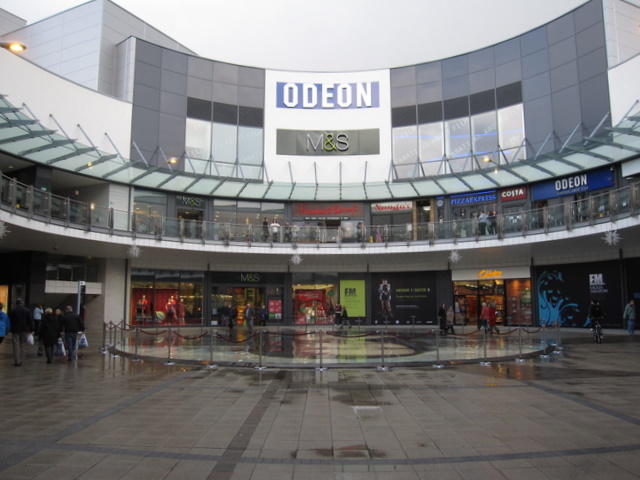

From St Giles, walk five minutes east to Eagles Meadow — Wrexham's modern retail quarter, built over a former industrial site and anchored by a covered shopping centre with good independent traders alongside the usual names. It is worth a wander: the market hall at Tŷ Pawb on Market Street just beyond is a destination in its own right — a creative arts centre, food traders, and the kind of energetic independent spirit that defines what Wrexham is becoming.
The Wrexham AFC Club Shop is essential. Since Reynolds and McElhenney's arrival, demand for the red shirt has been extraordinary — the club now ships worldwide — but there is something different about buying it here, in the city, a short walk from the ground. The shop carries the full range: shirts, scarves, training wear, and the kind of branded merchandise that reflects a club now operating at a genuinely different level of cultural visibility.
Lunch at The Fat Boar

There is no better place for lunch in Wrexham than The Fat Boar on Hope Street. This is proper food — burgers built with genuine care, sharing boards of exceptional quality, craft beers sourced with as much thought as the kitchen puts into the menu — in a space that has exactly the right amount of personality. It is lively, welcoming, and the kind of pub-restaurant that would hold its own in any city in England or Wales.
The Fat Boar is the post-match pub of choice for Wrexham supporters who want something better than the crush at The Turf. On a midweek afternoon it is considerably quieter and you can eat at ease. The smash burgers are the thing; the shared nachos are generous enough to warrant restraint elsewhere. Allow an hour.


STōK Cae Ras & Welcome to Wrexham Filming Locations
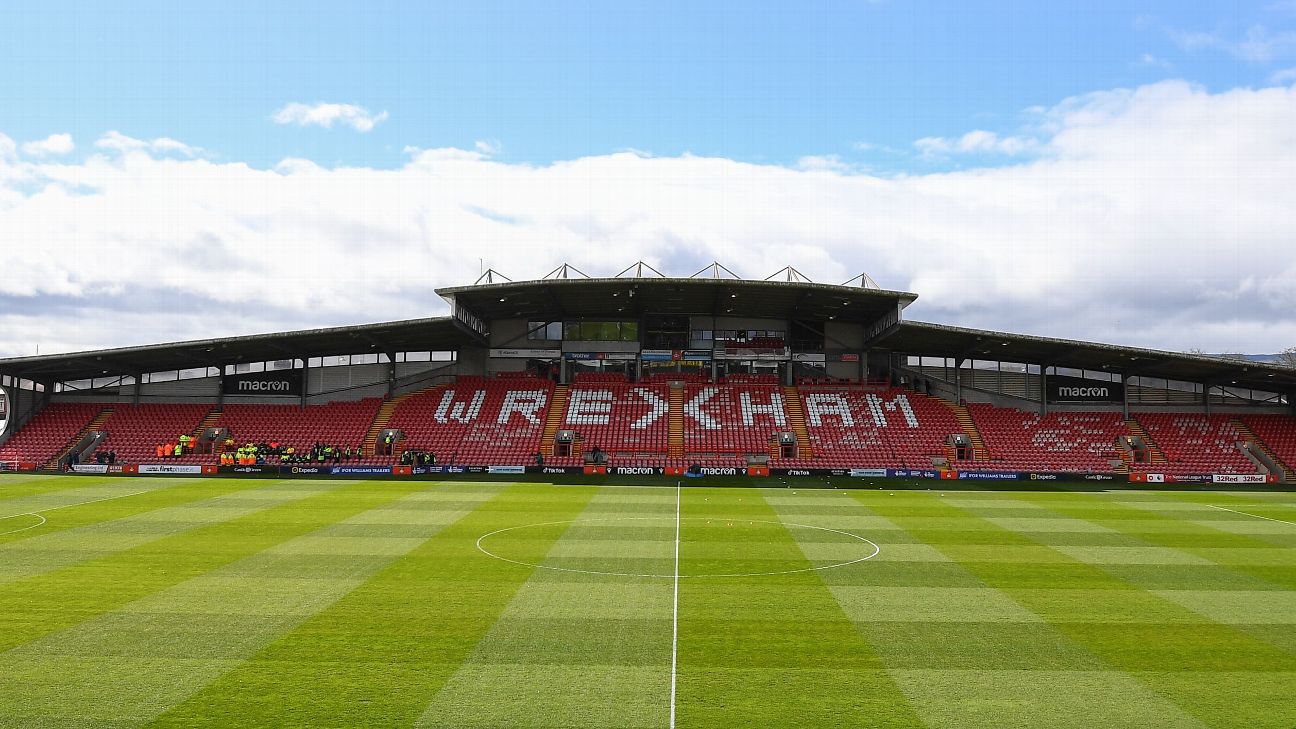
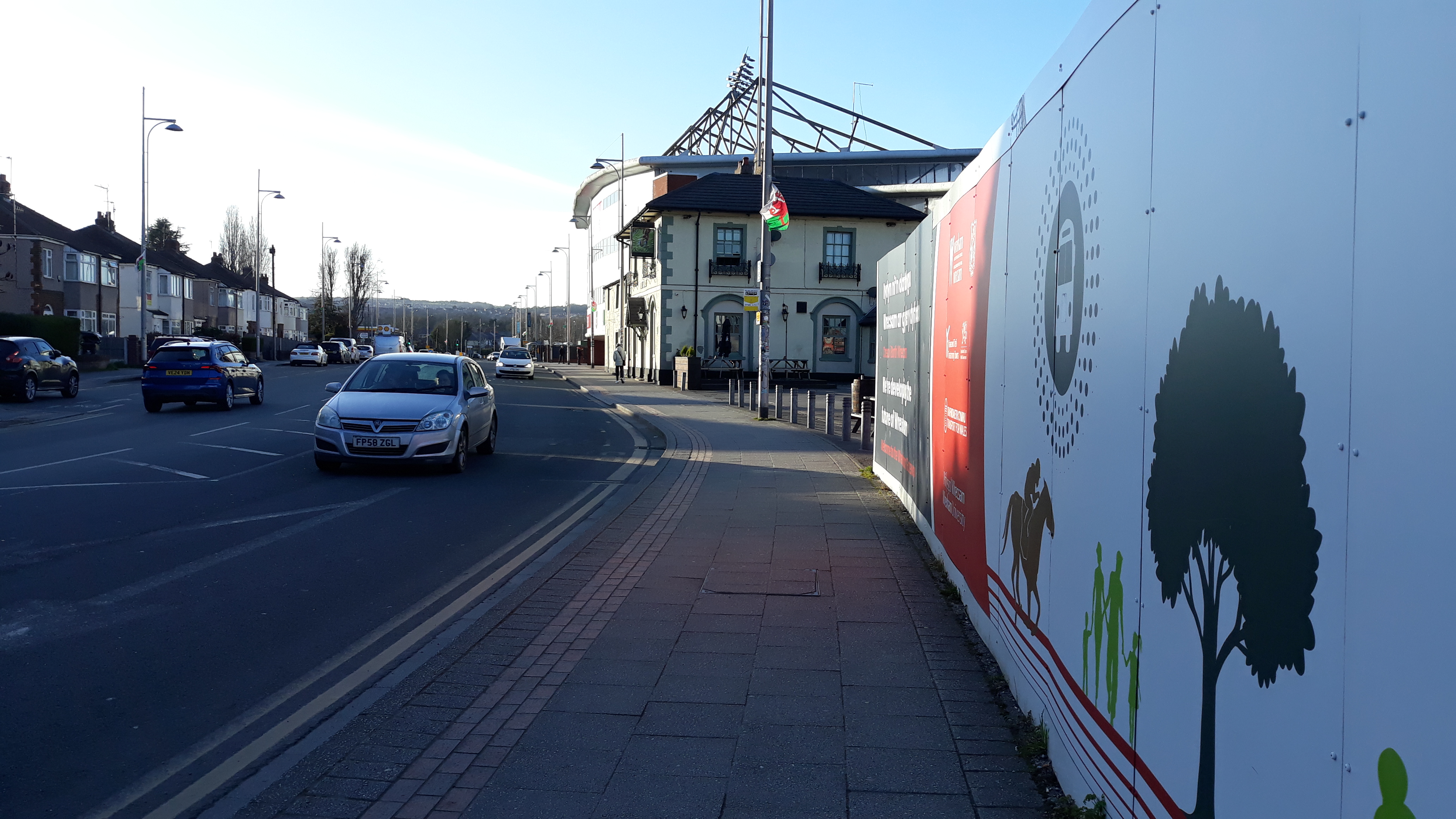
The walk from Hope Street to the STōK Cae Ras takes eight minutes along Regent Street. The ground — officially the world's oldest international football stadium still in use — is smaller than the television makes it look, and more intimate for it. On a non-match day you can walk the perimeter, photograph the stands from Mold Road, and see the famous Turf Hotel in its proper context: the oldest pub at any sporting stadium in the world, built directly into the corner of the ground before football even existed.
For viewers of Welcome to Wrexham, this stretch of Mold Road is rich with familiar scenes. The Turf forecourt, the Mold Road stand exterior, the corner where supporters gather — these are locations the documentary returned to repeatedly, and they are exactly as they appear: real, unpolished, and full of the genuine community feeling that no amount of Hollywood attention has managed to manufacture or diminish.
We didn't buy Wrexham as a project. We fell in love with a football club and everything it meant to a community. The fact the world came along for the ride still surprises us every single day.
— Rob McElhenney, Co-Chairman, Wrexham AFC
An Evening in Belle Vue Park

End the day at Belle Vue Park — a ten-minute walk south from the ground — and one of the most overlooked pleasures in North Wales. The park was laid out in the 1880s and is Grade II listed: formal Victorian planting, a bandstand, sweeping views over the valley, and an atmosphere of unhurried municipal grace that belongs entirely to the city. On a fine afternoon it is extraordinarily beautiful.
This is the correct conclusion to a Wrexham day: the city's oldest park, largely unknown to visitors, entirely loved by its residents. Sit on a bench at the top of the bank, look out over the rooftops toward the Welsh hills beyond, and reflect on a place that has somehow, improbably, become one of the most talked-about cities on earth. It still feels, here in the park, like somewhere that belongs entirely to itself.


